

Designing a commercial building does not simply mean creating an operational space, but shaping an environment that represents a brand’s identity and supports the well-being of those who experience it every day. Today more than ever, architecture and design play a strategic role: they influence customer experience, people’s productivity, and the overall perception of the company.
An architecture that communicates the brand
Every commercial project begins with a fundamental question: what should this building communicate? In this case, the design was conceived as an extension of the company’s philosophy, translating values such as innovation, transparency, and reliability into concrete architectural choices.
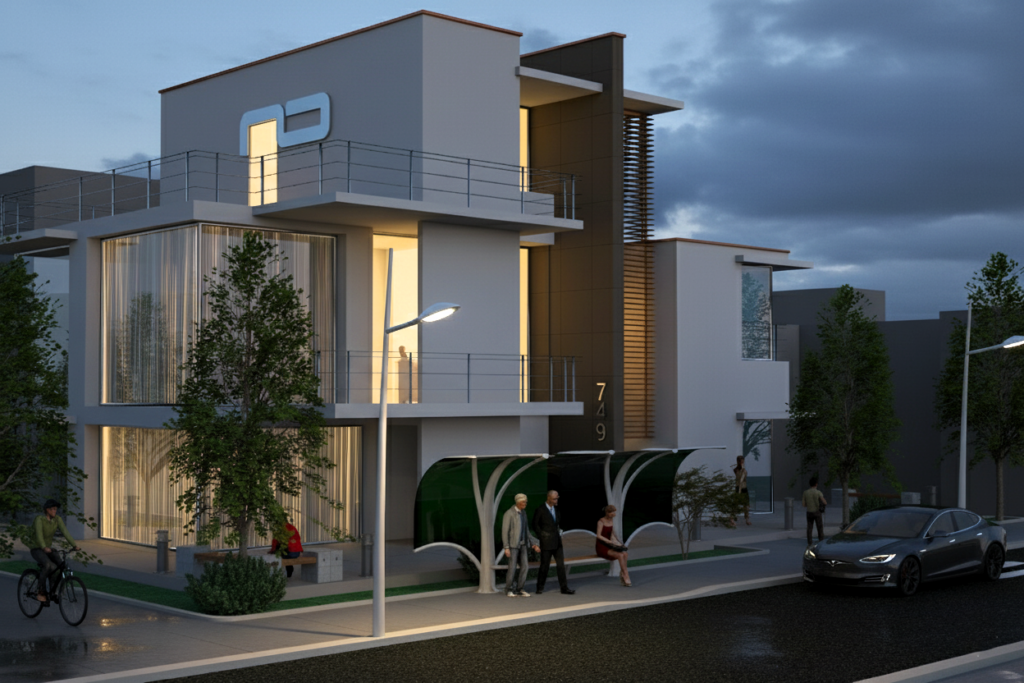
Clean lines, essential volumes, and contemporary materials contribute to creating a recognizable image, capable of standing out within the urban context without being intrusive.
Spaces designed for efficiency and flexibility
One of the key aspects of the project was the design of flexible and adaptable environments. The interior spaces were organized to encourage collaboration among teams, while also maintaining dedicated areas for focus and privacy.
Modular open spaces, multifunctional meeting rooms, and well-distributed common areas allow the building to evolve alongside the company’s needs. In this way, flexibility becomes a long-term investment.
User experience and intuitive circulation
The design of a commercial building must naturally guide different users — employees, clients, and visitors. For this reason, clear and intuitive circulation paths were carefully planned to simplify movement throughout the space and enhance the overall experience.
The main entrance serves as a visual focal point, while the spatial layout reduces travel time and creates a sense of order and professionalism.
Materials, technology, and sustainability
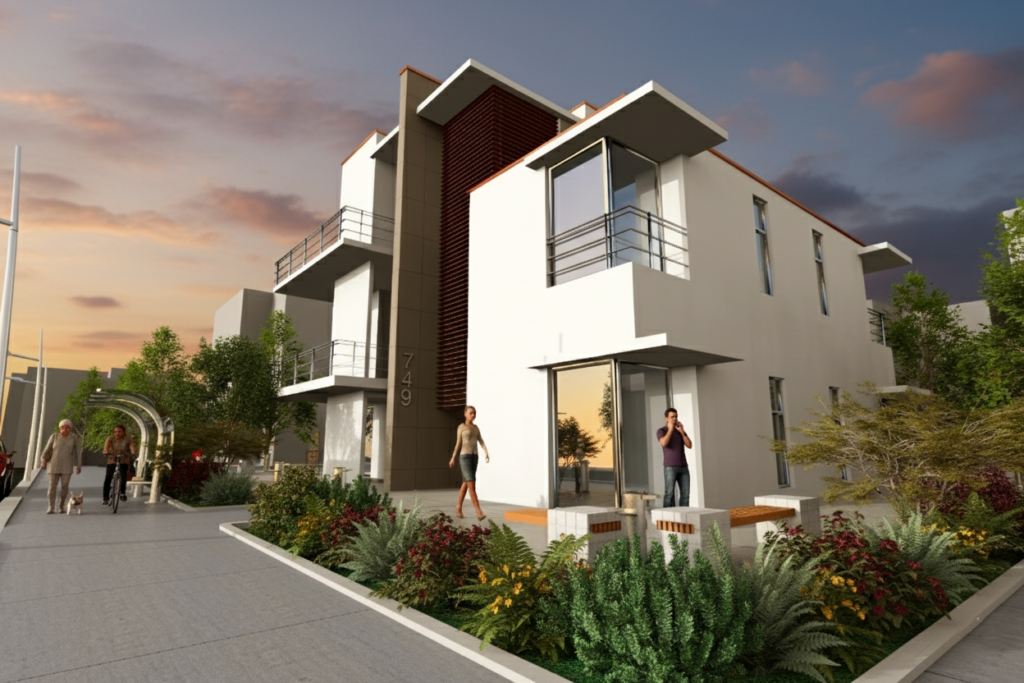
The selection of materials followed a clear rationale: durability, ease of maintenance, and aesthetic quality. Resistant surfaces, contemporary finishes, and integrated technological solutions help create a modern and functional environment.
Great attention was also given to sustainability: optimization of natural light, reduction of energy consumption, and the use of environmentally high-performance materials represent key elements of the project.
Light as a strategic element
In a commercial setting, light is not only an aesthetic factor but also a productive one. Large windows ensure abundant natural brightness throughout the day, while artificial lighting was designed to adapt to different activities and enhance visual comfort.
The result is a space that promotes focus, energy, and well-being.